
1
Model the program
Confirm the tenant structure, roles, modules, legal obligations, and evidence types that belong in scope.
Asiri helps Nigerian teams keep vendor risk connected to RoPA, transfers, DPAs, sub-processors, security evidence, human-reviewed AI provider evidence, and buyer-facing Trust Centers.
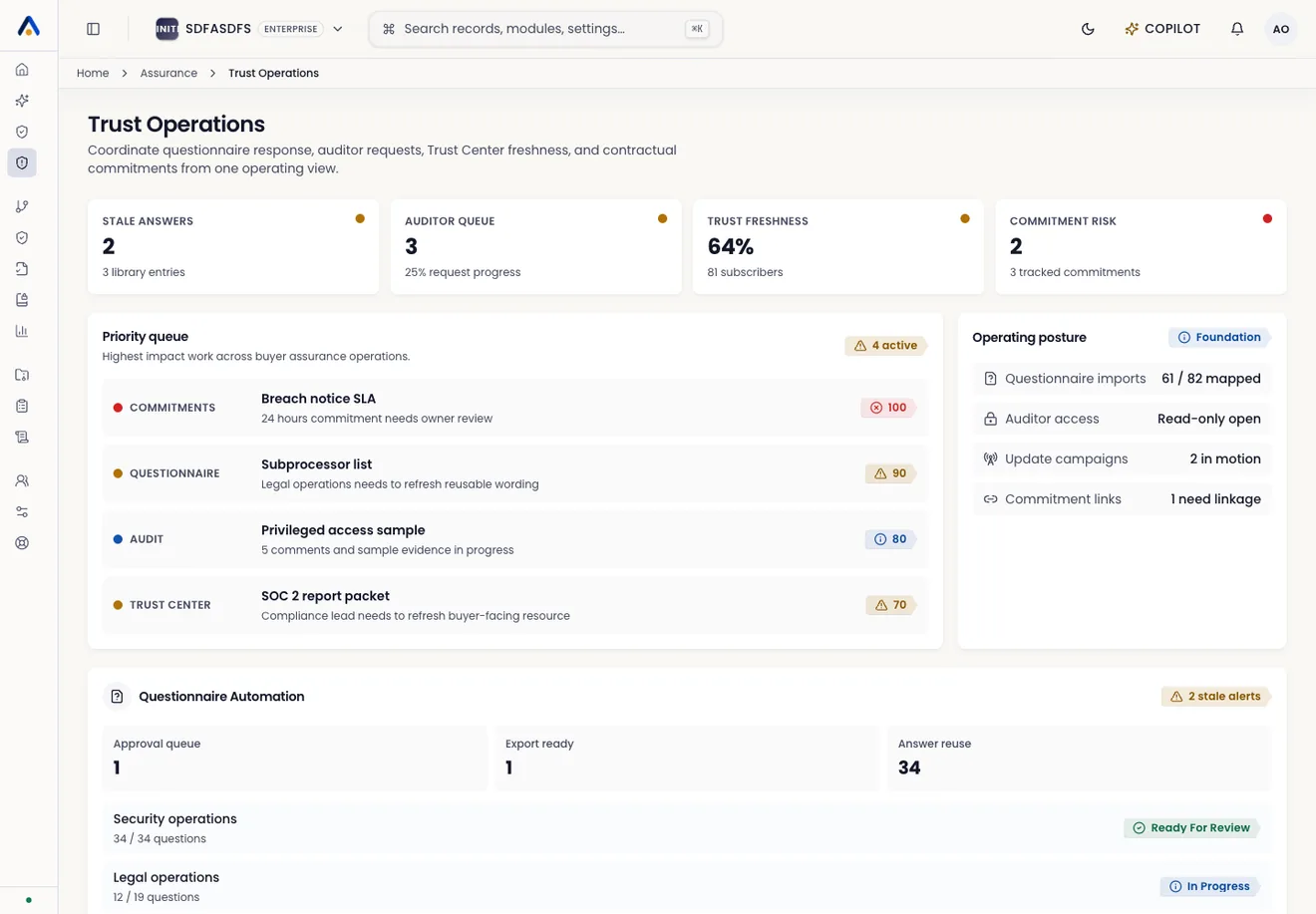
Ask to see the records behind the page: the owner trail, evidence status, reviewer decisions, exports, and customer-facing output.
Vendor and sub-processor inventory with owner, country, purpose, and data categories
DPA, transfer mechanism, assurance evidence, retention, and AI-setting records
Risk-tiered reviews, exceptions, approvals, remediation tasks, and renewal decisions
Trust Center sub-processor publication tied to internal vendor review status
Confirm the tenant structure, roles, modules, legal obligations, and evidence types that belong in scope.
Route each workflow to the right owner and reviewer with dates, status, and review context visible.
Reuse the same evidence for internal oversight, customer due diligence, regulator questions, and readiness reviews.
Know which vendors touch personal data and where that data goes
Avoid stale processor and sub-processor records during audits or buyer reviews
Connect procurement, privacy, security, and legal owners in one workflow
Named owners, reviewer actions, due dates, and activity history for the work behind each claim.
Exportable records for regulators, buyers, auditors, DPCOs, boards, or internal governance reviews.
Trust Center content, gated files, answer reuse, freshness signals, and clear attestation boundaries.
Yes. AI providers should be reviewed for region, retention, training use, deletion, sub-processors, security posture, and whether personal data enters prompts or outputs.
Yes. Internal vendor records can publish controlled sub-processor information and freshness context to the customer Trust Center.